
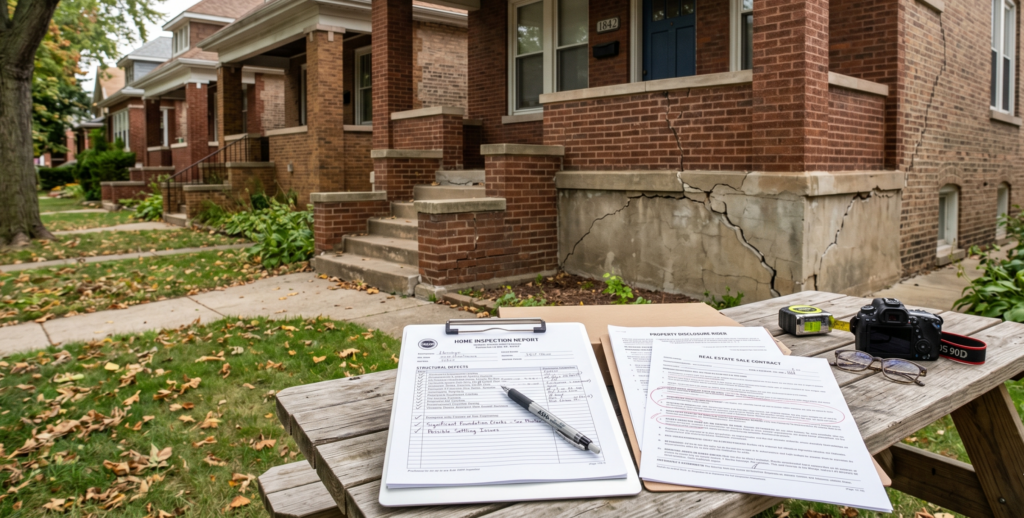
Chicago foundation problems buyers encounter can create serious financial and safety concerns. Structural defects may lower property value, increase repair costs, and delay financing. Because foundation damage often affects the entire home, buyers should act carefully when inspection reports reveal major issues.
In many Chicago neighborhoods with older housing stock, shifting soil, water intrusion, and age-related settlement can contribute to foundation movement. Understanding your legal options helps protect your investment before closing.
Chicago Foundation Problems Buyers Should Watch For
Not every crack means the same thing. However, some warning signs deserve immediate attention.
Common red flags include:
- Horizontal or stair-step cracks in masonry
- Uneven floors or sloping rooms
- Doors and windows that stick
- Water seepage in basements
- Bowed basement walls
- Large gaps around frames or trim
The International Association of Certified Home Inspectors explains that structural movement and moisture intrusion often require further evaluation by qualified specialists.
Therefore, buyers should not ignore visible signs of movement.
How Chicago Foundation Problems Affect Value and Financing
Foundation defects can reduce market value and make resale more difficult. In addition, some lenders may require repairs or engineering reports before approving financing.
Serious structural issues may also lead to:
- Higher insurance concerns
- Expensive waterproofing costs
- Ongoing settlement repairs
- Buyer hesitation during resale
Consumer housing guidance from HUD notes that property condition issues may affect financing eligibility and habitability standards.
Legal Options for Chicago Buyers After Inspection
When inspections reveal major structural concerns, buyers often have several options depending on the contract terms.
These may include:
- Requesting seller repairs
- Negotiating a price reduction
- Asking for closing credits
- Extending inspection periods for expert review
- Canceling the contract when allowed
Because timelines matter, buyers should act quickly after receiving reports.
As a result, legal review can help preserve important rights.
Why Disclosure Issues Matter
If a seller knew about past foundation repairs, water intrusion, or recurring movement, disclosure laws may become important. Illinois sellers generally must disclose known material defects in residential transactions.
The Illinois Residential Real Property Disclosure Act outlines seller disclosure obligations.
Failure to disclose known structural issues may create additional legal remedies.
Why Attorneys Matter in Foundation Disputes
Foundation problems often involve more than repair estimates. They can affect contracts, deadlines, financing, and disclosure rights.
A Chicago real estate attorney can help by:
- Reviewing inspection contingency deadlines
- Negotiating credits or repairs
- Assessing disclosure concerns
- Advising on cancellation rights
- Protecting earnest money deposits
Most importantly, legal guidance helps buyers make informed decisions under pressure.
Protect Your Purchase With Titcomb Law Group
Chicago foundation problems buyers discover during inspections should never be taken lightly. Structural defects can change the economics of a deal quickly.
Titcomb Law Group helps Chicago buyers evaluate inspection findings, negotiate solutions, and protect their rights when serious defects arise.
👉 Contact Titcomb Law Group before closing to review your legal options and move forward with confidence.
