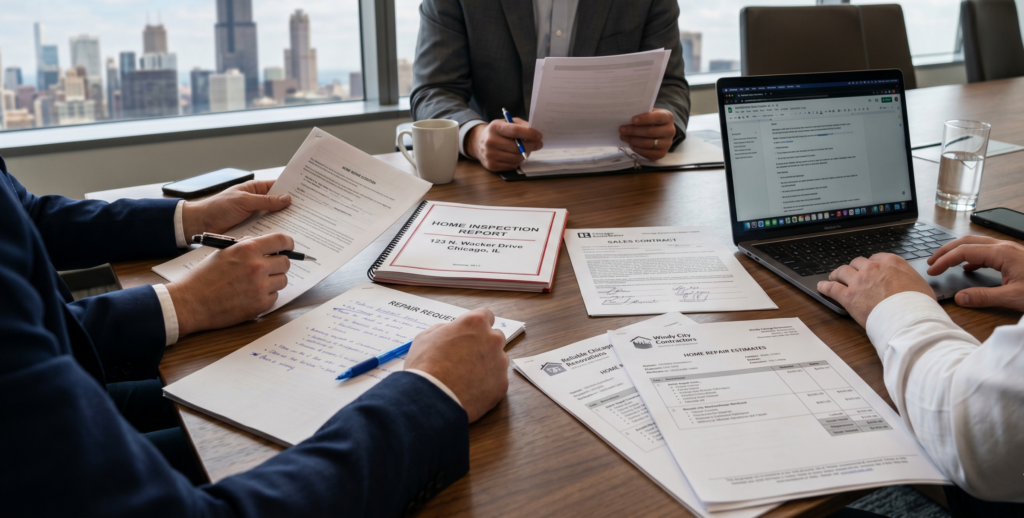
Chicago inspection repair negotiations are one of the most important parts of many real estate transactions. After a buyer receives the inspection report, both parties often negotiate repairs, credits, or price adjustments before closing.
While some inspection findings are minor, others may involve safety hazards, structural concerns, or expensive system failures. Understanding how repair negotiations work helps buyers protect their investment and avoid future disputes.
What Chicago Inspection Repair Negotiations Typically Involve
Inspection negotiations usually begin after the buyer receives the home inspection report. Buyers may request repairs or financial concessions based on significant findings.
Common repair requests include:
- Roof leaks or damage
- Plumbing or sewer issues
- Electrical hazards
- Foundation movement
- HVAC failures
- Water intrusion or mold concerns
The American Society of Home Inspectors explains that inspections identify visible material defects that may affect safety or value.
As a result, inspection findings often become a major negotiation point before closing.
Why Serious Inspection Issues Matter in Chicago Transactions
Not every issue justifies a repair request. However, major defects can significantly affect value, financing, or habitability.
For example, buyers may face:
- costly repairs after closing,
- lender concerns,
- insurance complications,
- or future resale problems.
In Chicago, older properties may present additional concerns involving aging infrastructure, water intrusion, or deferred maintenance.
Therefore, buyers should prioritize issues that create financial or legal risk rather than cosmetic concerns.
Options During Chicago Inspection Repair Negotiations
Buyers and sellers typically have several ways to resolve inspection disputes.
Common solutions include:
- Seller-funded repairs before closing
- Closing cost credits
- Purchase price reductions
- Escrow holdbacks for future repairs
- Additional inspections by specialists
Consumer guidance from the Illinois Attorney General recommends carefully reviewing inspection findings and contract rights during residential transactions.
In many cases, negotiated credits may be preferable to rushed repairs completed shortly before closing.
Why Repair Agreements Must Be Clear and Enforceable
Verbal promises during negotiations can create serious problems later. Repair terms should always be documented clearly in writing.
A strong repair agreement should identify:
- Specific repairs required
- Completion deadlines
- Responsibility for payment
- Contractor requirements
- Proof of completed work
Otherwise, disputes may arise if repairs are incomplete or performed improperly before closing.
How Lawyers Help During Inspection Negotiations
Attorneys play an important role in Chicago inspection repair negotiations because repair disputes directly affect contract rights and closing obligations.
A Chicago real estate attorney can:
- Review inspection findings
- Draft enforceable repair language
- Negotiate credits or contract modifications
- Protect earnest money deposits
- Help buyers avoid unclear agreements
Most importantly, legal guidance helps ensure repair terms are properly documented and enforceable.
Protect Your Purchase With Titcomb Law Group
Chicago inspection repair negotiations can significantly impact the success of a real estate transaction. Proper legal guidance helps buyers negotiate effectively and avoid costly misunderstandings after closing.
Titcomb Law Group represents Chicago buyers during inspection negotiations and helps ensure repair agreements are clearly documented and legally enforceable.
👉 Contact Titcomb Law Group to protect your rights during inspection negotiations and closing.
