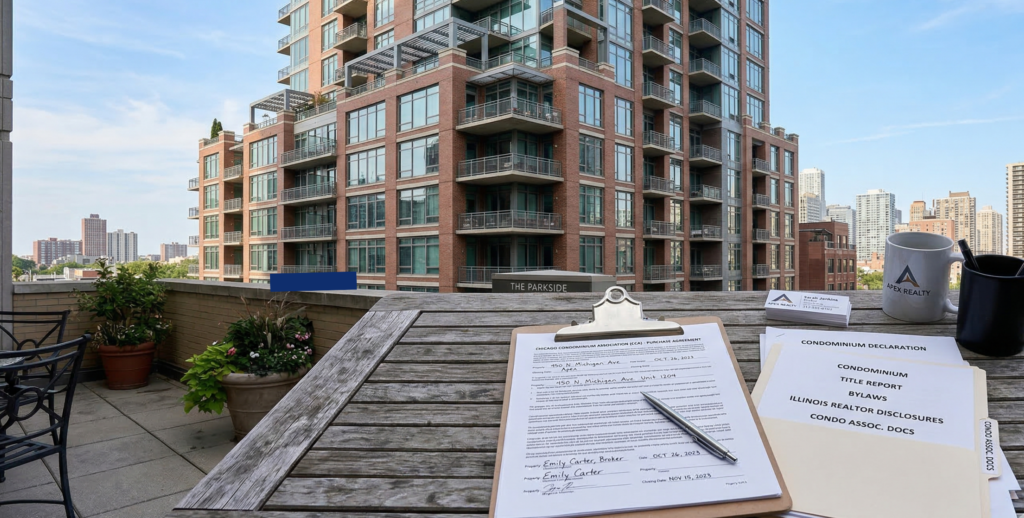
Buying a condominium in Chicago means more than purchasing a unit — it also means becoming part of a condominium association. Because associations control rules, finances, and building management, reviewing condo association documents in Chicago is one of the most important steps before closing.
Illinois law requires sellers to provide association disclosures, but many buyers do not fully understand what these documents contain or why they matter. Without careful legal review, buyers may face unexpected fees, restrictions, or financing problems after the purchase.
Chicago Condo Association Documents Required by Illinois Law
Under the Illinois Condominium Property Act, sellers must provide specific association information to buyers before completing a condo sale. This requirement comes from Section 22.1, which requires disclosure of governing documents, financial information, and other association records.
These disclosures typically include:
- Declaration and bylaws
- Rules and regulations
- Budget and reserve information
- Pending lawsuits
- Unpaid assessments
- Planned capital expenses
The purpose of Section 22.1 is to ensure buyers understand the financial and legal obligations tied to the unit before they agree to purchase.
In Chicago real estate transactions, these are commonly called 22.1 disclosures, and they are a standard part of condominium closings.
HOA Rules Found in Chicago Condo Association Documents
Many buyers assume they can use their condo however they want, but association rules can place strict limits on owners.
Condo documents may restrict:
- Renting or short-term rentals
- Pets or breed limits
- Renovations
- Parking rights
- Occupancy limits
These rules are legally enforceable once you become an owner, because the declaration and bylaws are binding on all unit owners.
In Chicago, this is especially important in multi-unit buildings where association rules affect insurance, maintenance, and shared expenses.
Financial Risks in Condo Association Documents in Chicago
One of the biggest risks in condo purchases is the financial condition of the association.
Section 22.1 disclosures must include information about reserves, unpaid assessments, and planned capital projects. These details can reveal whether the association may need to charge owners additional money after closing.
If reserves are low, buyers may face:
- Special assessments
- Higher monthly dues
- Emergency repairs
- Loan approval problems
Lenders often review association finances before approving a mortgage, which means financial issues can delay or cancel a Chicago closing.
Pending Lawsuits Can Affect Financing and Closing
Association litigation is another common issue found in condo documents.
If the building is involved in lawsuits related to construction defects, insurance disputes, or unpaid contractors, lenders may refuse to approve financing until the issue is resolved.
This is one reason reviewing meeting minutes, budgets, and disclosure forms is critical before finalizing the purchase.
In older Chicago buildings, lawsuits related to repairs, masonry work, or structural issues are not uncommon, making legal review even more important.
Association Documents Are Legal Documents — Not Just Paperwork
Many buyers skim through HOA documents without understanding the legal impact.
But association declarations, bylaws, and financial statements are binding contracts that affect ownership rights, costs, and responsibilities.
A Chicago real estate attorney can help:
- Review the 22.1 disclosure package
- Identify risky rules or restrictions
- Check for financial red flags
- Review pending litigation
- Explain owner obligations before closing
Legal review often catches issues that buyers and agents may not notice until it is too late.
Why This Matters for Chicago Condo Buyers
Chicago has one of the largest condominium markets in the Midwest, with many older buildings, self-managed associations, and multi-unit properties. These factors increase the chances of:
- Underfunded reserves
- Special assessments
- Rule restrictions
- Title or financing problems
Reviewing condo association documents in Chicago before closing helps buyers understand exactly what they are agreeing to — not just the price of the unit, but the obligations that come with it.
Protect Your Purchase With Titcomb Law Group
Buying a condo without reviewing the association documents can lead to unexpected costs and legal problems after closing.
Titcomb Law Group represents Chicago buyers in condominium transactions and carefully reviews association disclosures, financial records, and HOA rules before closing.
Legal oversight helps ensure there are no surprises after you become the owner.
👉 Contact Titcomb Law Group to review your condo association documents before closing.
