
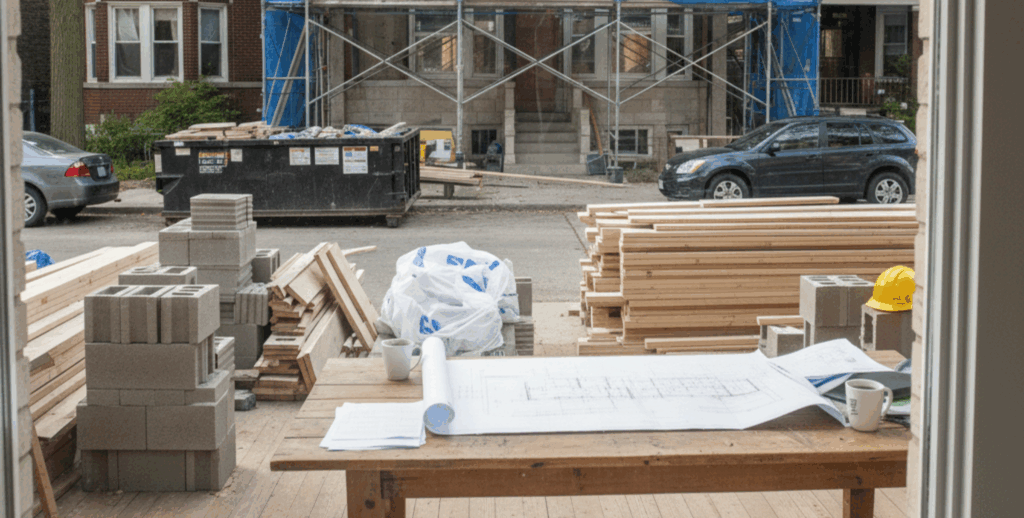
Adding space to your home can increase comfort and property value. However, Chicago home addition laws strictly regulate how and where homeowners can expand. Permits, zoning rules, and building codes all apply, and failure to comply can result in fines, stop-work orders, or forced removal of unapproved construction.
Before construction begins, homeowners should understand the legal requirements that apply to home additions in Chicago.
Permit Requirements Under Chicago Home Addition Laws
Most home additions in Chicago require permits issued by the City of Chicago Department of Buildings. These permits ensure that additions meet safety, structural, and zoning standards.
Permit review typically covers:
- Structural integrity
- Electrical, plumbing, and HVAC work
- Compliance with zoning setbacks and lot coverage rules
Starting construction without proper permits can lead to costly enforcement actions.
Zoning and Setback Rules in Chicago Home Addition Laws
Chicago zoning ordinances limit:
- How close additions can be built to property lines
- Maximum building height
- Floor area ratios and lot coverage
These rules vary by zoning district. Homeowners can review zoning classifications through the Chicago Zoning Ordinance.
Ignoring zoning restrictions often leads to disputes with neighbors or denial of final approval.
Neighbor Disputes and Property Line Issues
Home additions can trigger legal disputes when they affect:
- Shared walls or party walls
- Encroachments onto neighboring property
- Light, air, or access concerns
Because property lines in Chicago can be narrow and closely spaced, even small additions may raise legal concerns. Reviewing surveys and easements before construction helps prevent future conflicts.
How a Real Estate Lawyer Helps Protect Homeowners
A real estate lawyer can:
- Review zoning and permit requirements
- Address easement and boundary concerns
- Coordinate with architects and contractors
- Respond to city notices or violations
- Help resolve disputes before they escalate
Legal review ensures your addition complies with Chicago law and protects your investment.
Final Thoughts: Build With Confidence
Home additions offer valuable improvements—but only when done correctly. Understanding Chicago home addition laws before construction begins helps homeowners avoid delays, fines, and legal disputes.
Titcomb Law Group assists Chicago homeowners with legal guidance for home additions, zoning compliance, and property-related disputes.
📞 Before starting your home addition, contact Titcomb Law Group to ensure your project complies with Chicago law and protects your property rights.
