
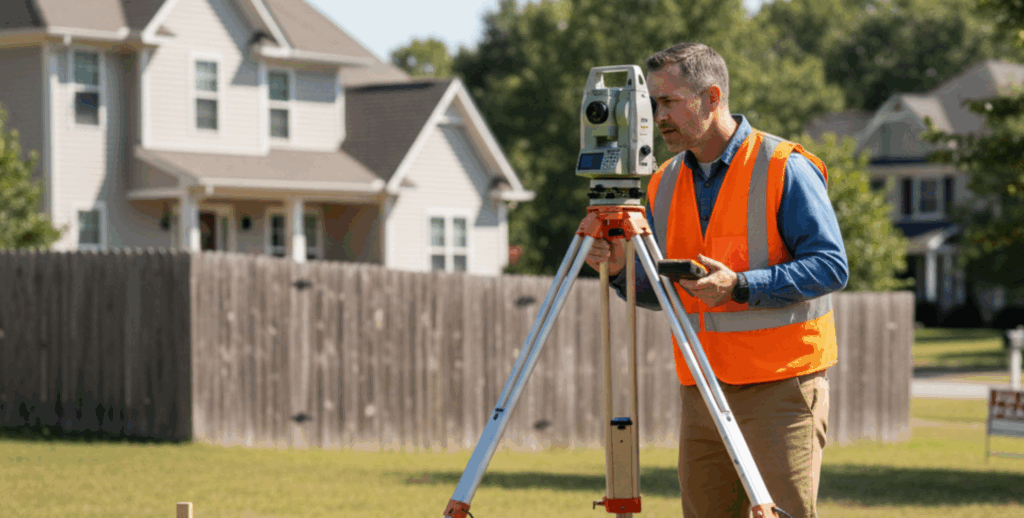
When you’re buying property — whether it’s a house with land or a vacant lot — it’s easy to assume that the boundaries are as they appear. Maybe the fence aligns with your deed, or that tree line “must be the edge of the property.” But skipping a boundary survey before buying can lead to serious, expensive disputes after you close. In this post, we’ll explore why boundary surveys matter, what can go wrong without them, and how having a lawyer involved ensures your survey is both accurate and legally enforceable.
Why Boundary Surveys Are Crucial Before You Buy
1. Clarifying True Property Lines
A boundary survey precisely determines the legal property lines of a parcel. As Lucion Group explains, it involves measuring, mapping, and identifying corners, easements, and encroachments.
Without that clarity, what “looks” like your land might not actually be yours.
2. Preventing Encroachments and Disputes
Many boundary issues arise when neighbors build structures (like fences, sheds, or driveways) that cross over invisible lines. A survey can uncover existing encroachments before you buy, helping you negotiate or plan around them.
If you skip the survey, you risk costly legal fights later — and title insurance may not cover such boundary disputes.
3. Legal Protection & Court-Recognized Evidence
If a boundary dispute escalates, a licensed land survey can serve as strong legal evidence. Courts often rely on professional surveyors’ reports when determining property lines.
A survey gives you documented proof of exactly what land you own, reducing your risk of adverse possession or other claims.
4. Ensuring Compliance With Zoning and Building Laws
Zoning rules and building permits often require accurate boundary information. Surveying can reveal whether any existing or planned structures violate setback rules or encroach on easements — helping you avoid code issues.
Without a survey, you might later face fines or be forced to move structures.
5. Avoiding Financial Risk
Skipping a survey can cost you more than the survey itself. Incorrect boundaries can lead to value loss, litigation, or forced removal of a structure.
Plus, some lenders or title companies may require a recent survey — or limit coverage if one isn’t done.
As the Wisconsin Society of Land Surveyors notes, without a proper survey, you might assume boundary lines that don’t match the deed.
The Role of a Lawyer in Boundary Surveys
Hiring a real estate lawyer in conjunction with your surveyor adds a crucial layer of protection and enforceability:
- Review of Survey Plan
A lawyer can read the survey plat (map) and legal description, ensuring it aligns with your deed, title report, and any local requirements. - Ensuring Enforceability
The lawyer can help you draft or review easement agreements, boundary agreements, or other legal instruments that rely on the survey data — making the survey not just informational, but enforceable in dispute. - Negotiating Based on Survey Findings
If the survey reveals issues (e.g., encroachments, missing boundary markers, or easements), your lawyer can renegotiate terms, adjust price, or ask for remedies, based on real, documented risk. - Dispute Preparation
If a conflict arises later, having both a professional survey and legal review strengthens your case — whether in mediation, arbitration, or court.
Real-World Example: What Can Go Wrong Without a Survey
Imagine buying what you believe to be a 0.5-acre lot. The listing shows a “nice fenced yard” and the trees seem to mark the edges. After closing, you decide to build a shed — only to discover through a survey that the fence is 5 feet onto the neighbor’s property! Now you’re liable for removing or relocating it.
A boundary survey before closing would have revealed that discrepancy, allowing you to renegotiate or request adjustments. Without it, you might face legal action or unexpected costs.
Risks of Skipping the Survey
- Title Insurance Limitations: Some title insurers exclude boundary disputes if a current survey is not done.
- Wrong Assumptions from Visual Cues: Fences, trees, or structures are not always aligned with true property lines.
- Legal Vulnerability: Without a documented survey, you lack solid evidence if a dispute arises.
Recommendations for Homebuyers
- Always order a boundary survey before closing, even if it seems like overkill.
- Hire a licensed, professional surveyor, not just a sketch or location drawing. Boundary surveys are more precise and legally reliable.
- Work with a real estate attorney to review survey findings, negotiate fixes, and embed the survey into your legal protections.
- Record the survey in public records, if required, to ensure lasting protection.
- Use the survey for future planning — fences, additions, or landscaping should reference the survey lines.
Final Thoughts
Boundary surveys before buying a property are more than just a formality — they protect you from costly disputes, encroachments, and legal headaches. With accurate surveys and legal oversight, you can confidently know exactly what you’re purchasing and safeguard your investment.
👉 At Titcomb Law Group, we ensure your boundary survey is accurate, enforceable, and fully reviewed by a lawyer — so your property purchase is smooth, secure, and free from surprises.
