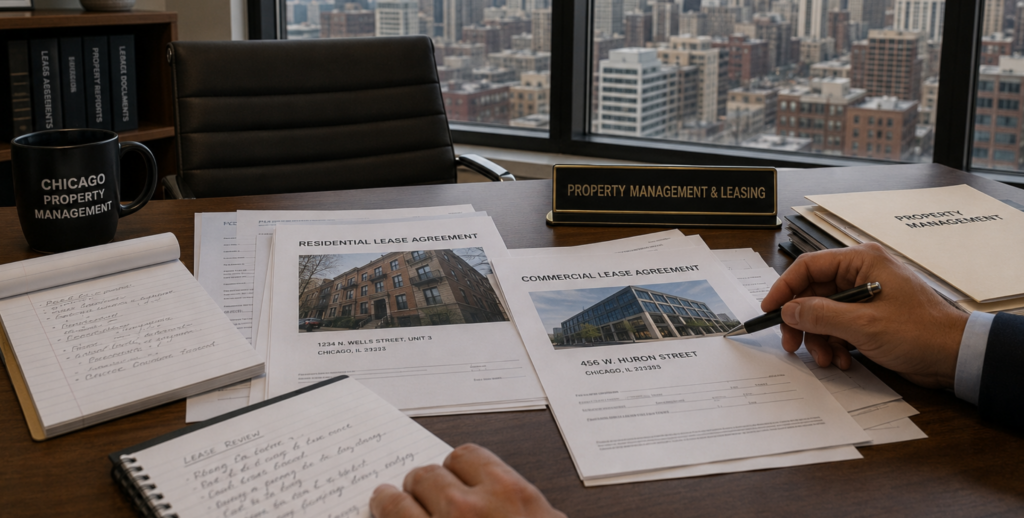
Chicago lease review is one of the most important steps property owners can take before signing a lease agreement. Whether you own a residential rental property, mixed-use building, or commercial space, the lease establishes the rights, responsibilities, and long-term obligations of both parties.
A poorly drafted lease can create disputes, financial losses, and unnecessary legal exposure. As a result, property owners should carefully review lease terms before entering into any landlord-tenant relationship.
What a Chicago Lease Review Should Cover
A lease is more than a rent agreement. It serves as a legally binding contract that governs the relationship between the landlord and tenant.
During a Chicago lease review, property owners should carefully evaluate:
- Rent payment terms
- Security deposit provisions
- Maintenance responsibilities
- Repair obligations
- Renewal and termination clauses
- Default provisions
- Property use restrictions
- Insurance requirements
The City of Chicago provides landlord and tenant resources that explain rights and responsibilities under local housing regulations.
Therefore, reviewing lease language before signing can help prevent misunderstandings later.
Why Chicago Lease Review Matters for Landlords
Many lease disputes arise because important terms are unclear or incomplete.
For example, leases may fail to adequately address:
- Responsibility for repairs
- Late payment penalties
- Property damage
- Unauthorized occupants
- Subleasing restrictions
- Access rights for inspections
In addition, Chicago property owners must comply with applicable local ordinances and state laws that affect leasing relationships.
The Illinois General Assembly maintains the official text of Illinois landlord-tenant laws and related statutes.
Common Risks Hidden in Lease Agreements
A thorough Chicago lease review helps identify provisions that may expose property owners to unnecessary risk.
Potential concerns include:
- Ambiguous maintenance clauses
- Weak default remedies
- Inadequate insurance requirements
- Unclear renewal terms
- Missing attorney fee provisions
- Poorly defined property use restrictions
Because lease obligations often last for years, even minor drafting mistakes can become expensive problems over time.
Why Commercial Lease Review Is Especially Important
Commercial leases often involve greater complexity than residential agreements.
Commercial property owners may need to review:
- Tenant improvement obligations
- Common area maintenance charges
- Expense allocation provisions
- Personal guarantees
- Assignment and subletting rights
- Operating expense responsibilities
The U.S. Small Business Administration provides guidance regarding commercial leasing considerations and business occupancy issues.
Consequently, commercial leases often require more extensive legal review than standard residential agreements.
How Attorneys Help Protect Property Owners
Legal review helps property owners understand the long-term impact of lease provisions before signing.
A Chicago real estate attorney can:
- Draft customized lease agreements
- Review existing lease language
- Identify legal risks
- Strengthen enforcement provisions
- Ensure compliance with local and state requirements
- Help prevent future disputes
Most importantly, proactive legal review often costs far less than resolving a lease dispute after problems arise.
Protect Your Investment With Titcomb Law Group
A comprehensive Chicago lease review helps property owners avoid costly mistakes and create stronger landlord protections. Whether you own residential or commercial property, properly drafted lease agreements are essential to protecting your investment.
Titcomb Law Group assists Chicago property owners with lease drafting, lease review, contract negotiations, and real estate legal guidance.
👉 Contact Titcomb Law Group before signing a lease to protect your rights and strengthen your landlord protections.
