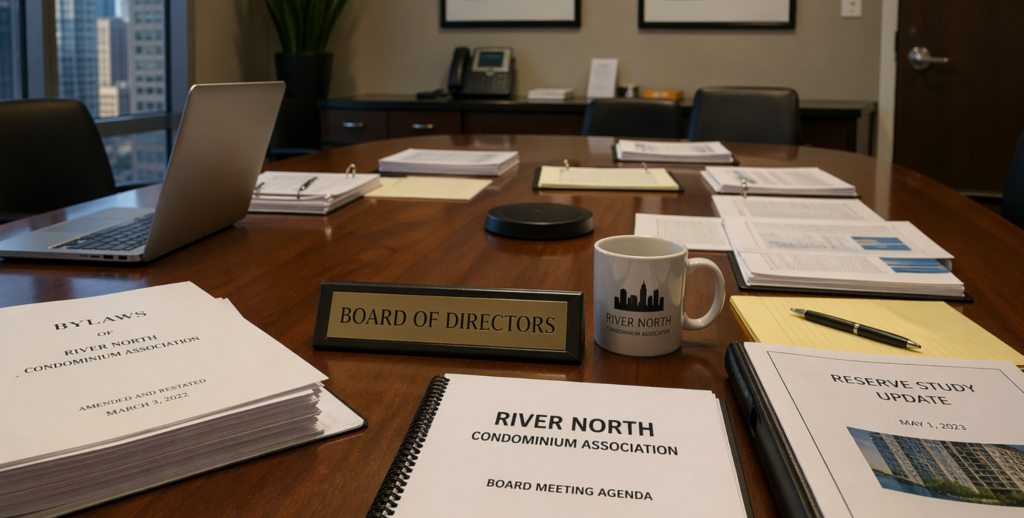
Serving on a condominium board comes with more than decision-making authority—it also comes with legal responsibility. Chicago condo board responsibilities include managing finances, enforcing rules, and acting in the best interest of the association.
Many board members volunteer without fully understanding their legal exposure. However, failing to follow governing documents or Illinois law can lead to disputes, liability, or financial consequences.
Chicago Condo Board Responsibilities Under Illinois Law
In Illinois, the Illinois Condominium Property Act outlines the authority and duties of condominium boards.
Under this law, board members must:
- Act within the authority of the declaration and bylaws
- Maintain common elements
- Adopt budgets and manage association finances
- Enforce rules consistently
- Keep and provide access to association records
Importantly, board members must act in good faith and in the best interests of the association—not for personal benefit.
Fiduciary Duties of Chicago Condo Board Members
Board members owe fiduciary duties to the association. This means they must act with care, loyalty, and honesty when making decisions.
Key duties include:
- Acting in the best interest of all unit owners
- Avoiding conflicts of interest
- Making informed decisions
- Exercising reasonable care in managing funds
Guidance from community association organizations emphasizes that boards must operate transparently and responsibly.
As a result, poor decision-making or misuse of authority can lead to disputes or legal claims.
Common Legal Risks for Condo Board Members
Even well-intentioned board members can face legal exposure.
Common risks include:
- Improper rule enforcement
- Failure to maintain the property
- Mismanagement of funds
- Lack of transparency with owners
- Violations of governing documents
For example, inconsistent enforcement of rules may lead to claims of unfair treatment or discrimination.
In Chicago condo associations—especially self-managed buildings—these issues often arise due to lack of experience or oversight.
How Chicago Condo Boards Can Stay Compliant
To reduce risk, boards should take proactive steps to stay compliant with Illinois law and their governing documents.
Best practices include:
- Following the declaration and bylaws closely
- Keeping detailed meeting records
- Communicating clearly with unit owners
- Reviewing financials regularly
- Seeking professional guidance when needed
In addition, boards should understand that authority comes with responsibility, and decisions should always align with legal requirements.
Why Legal Guidance Matters for Condo Boards
Condo board decisions often involve legal and financial implications.
A Chicago real estate attorney can:
- Review governing documents
- Advise on compliance with Illinois law
- Help resolve disputes with owners
- Guide boards on enforcement actions
- Reduce risk of liability
More importantly, legal guidance helps board members make informed decisions and avoid costly mistakes.
Protect Your Board With Titcomb Law Group
Chicago condo board responsibilities involve real legal obligations and potential liability. Understanding these duties helps board members protect themselves and the association.
Titcomb Law Group advises Chicago condo boards on governance, compliance, and legal risk management.
👉 Contact Titcomb Law Group to ensure your board operates legally and with confidence.
