Investing in a condominium in Chicago can be a smart move — but only if you understand the rules that govern what you can and cannot do with your unit. One of the most critical issues for buyers and investors is Chicago condo rental restrictions.
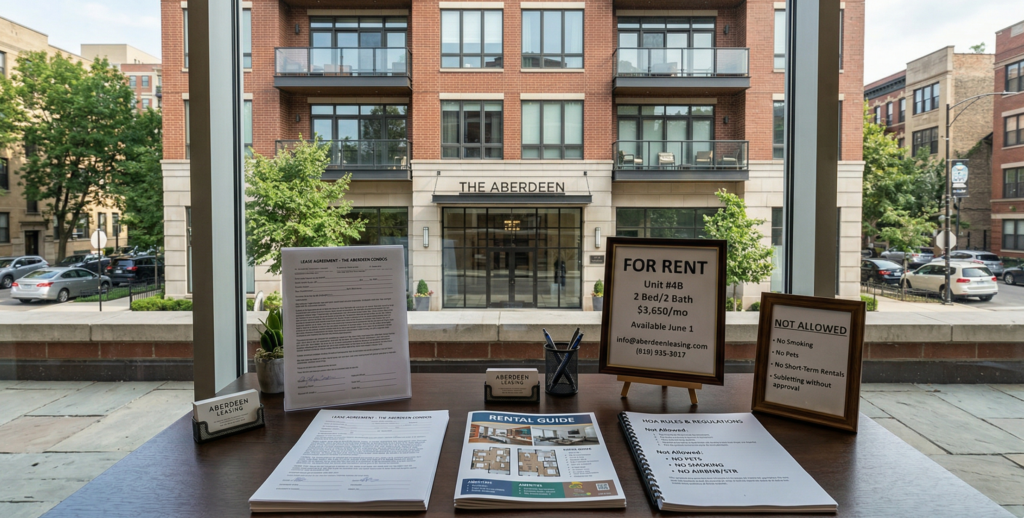
Condo associations often impose limits on how owners may rent their units. These restrictions can affect long‑term investment plans, Airbnb or short‑term rentals, and even the resale value. Reviewing rental rules before closing helps make sure your goals align with your rights.
Chicago Condo Rental Restrictions: What Associations Can Restrict
Condo associations in Chicago and throughout Illinois derive their authority to regulate rentals from state law and from their own governing documents. Per the Illinois Condominium Property Act, associations may include provisions in their rules or bylaws that govern leasing and rentals.
This can include:
- Complete bans on renting
- The requirement for board approval before leasing
- Minimum lease terms (e.g., 6‑ or 12‑month minimums)
- Limits on the number of units that can be rented at the same time
However, restrictions must be clearly articulated in the association’s governing documents — otherwise they may not be enforceable. For instance, attempts by a board to impose rental limits that don’t appear in the declaration may create disputes.
Short-Term Rental Restrictions in Chicago Condos and Local Laws
Beyond association rules, the City of Chicago regulates short‑term rentals through its Shared Housing Ordinance. Owners seeking to rent out a unit for short stays (like through Airbnb or VRBO) generally must register their property and comply with local licensing and safety requirements.
Furthermore, when a building’s association notifies the city that short‑term rentals are prohibited, that building may be added to a “prohibited buildings list,” making registration for short‑term rental platforms impossible.
How Restrictions Can Affect Buyers and Investors
Rental rules are not just a detail — they can directly affect the value and utility of a condo unit.
For example:
- A rental cap may limit the number of units that can be leased, leaving investors on waiting lists.
- Minimum lease terms can rule out short‑term or flexible rental income.
- An outright ban on rentals can make a condo unsuitable for investment.
Local real estate professionals note that rental restrictions are common in buildings seeking to preserve a residential character and protect property values, especially in areas like River North, Gold Coast, and Streeterville.
Why Buyers Must Review Rental Rules Before Closing
Rental restrictions are binding legal commitments. Once you buy a unit, you’re agreeing to follow the association’s governing documents — including any leasing limits. If restrictions were overlooked at closing, you might later be unable to rent the unit in the way you intended.
Here’s how buyers can protect themselves:
- Request full rental restriction documentation from the seller
- Review the declaration, bylaws, and rules for rental language
- Check whether local Chicago ordinances will restrict your plans
- Confirm whether rental caps, minimum lease terms, or prohibited building status apply
Why Legal Review Matters
Interpreting condo governing documents and local housing ordinances can be tricky. Boards may use technical language, and rental provisions may appear in multiple places — sometimes buried in the fine print.
A Chicago real estate attorney can:
- Identify rental restrictions before closing
- Explain how they impact your investment goals
- Confirm whether the association’s rules are enforceable
- Advise whether the building’s status under local ordinances affects your plans
Legal guidance helps ensure you are not surprised by rental limitations after closing.
Protect Your Investment With Titcomb Law Group
Chicago condo rental restrictions can influence your ability to generate income or use your property as planned. Understanding these rules before you buy helps you avoid costly surprises and align your purchase with your goals.
Titcomb Law Group reviews condo governing documents and rental rules to protect buyers and investors.
👉 Contact Titcomb Law Group before closing to review rental restrictions and close with confidence.
